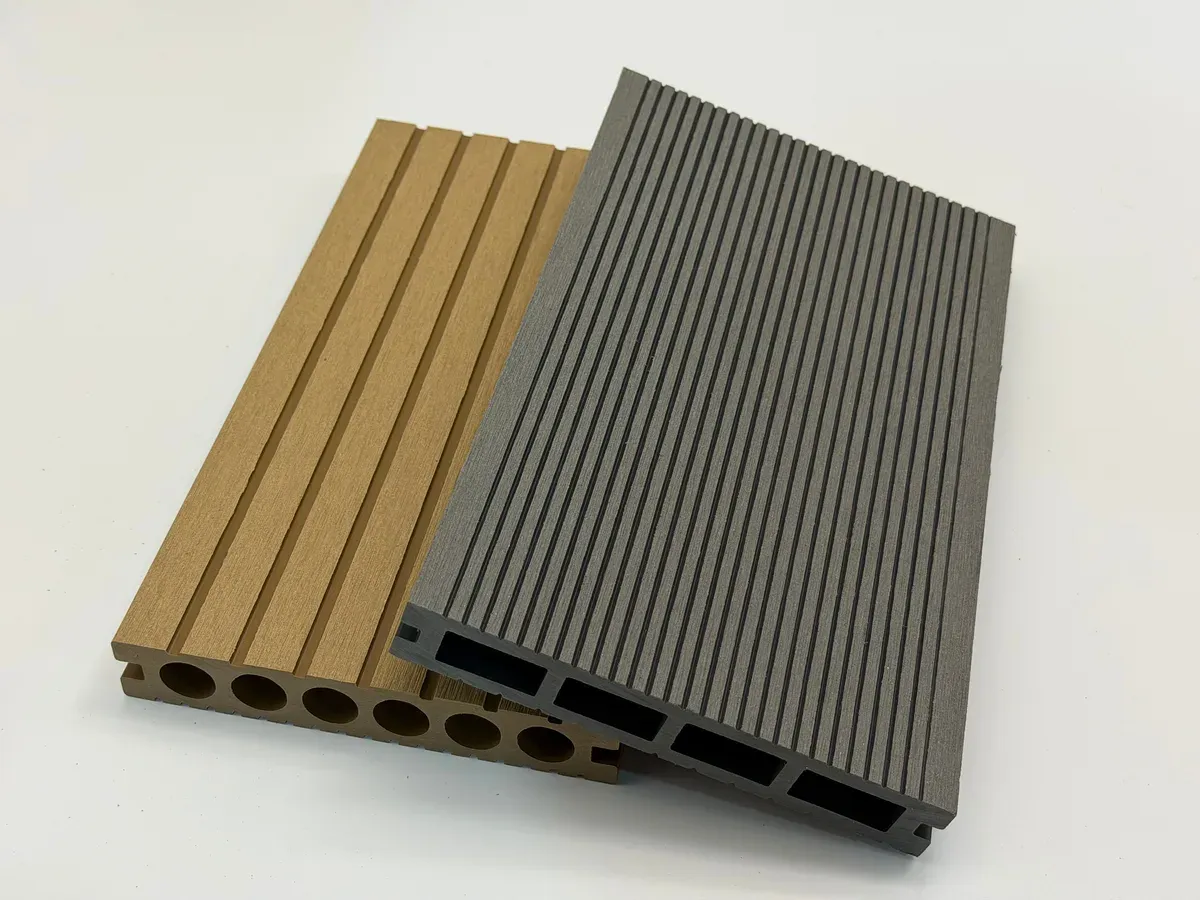
How to Care for WPC Decking: Cleaning and Colour
How to care for outdoor WPC and ASA decking: cleaning, colour and what time does to the surface. Colour lives in the cap, not a coating. Quote within 24 hours.
Outdoor WPC and ASA boards are made to live outside with little upkeep — but a little care keeps the colour and the surface looking right. This guide covers what to clean, what to leave alone, and how colour behaves over time, so a deck still looks like the sample it was sold from.
Will the colour change over time?
For ASA, the colour and the grain live in the 0.5 mm cap, not in a coating, so they cannot be washed or sanded off. The expected colour performance is at least 20 years in normal outdoor exposure, based on 4,000 hours of ASTM G155-25 accelerated testing — an expectation, not a warranty term. Swatches are reproduced from the colour card of production boards, and screen and daylight shift them slightly, so confirm against a physical sample before ordering. For WPC, some colour change is normal: every outdoor product fades under strong sun. T Home WPC boards are 60% wood fibre, and the lignin and cellulose in that fibre break down in sunlight, which is what changes the colour. A UV package and light stabiliser are added to slow it down, but it cannot be prevented entirely. The change finishes within 2–5 weeks of installation — after that the colour is stable and does not fade further. The fading is even and gradual across the whole surface, so it has little effect on how the deck looks, and it is hard to notice with the naked eye. Confirm the colour and finish on a free physical sample before ordering in bulk, because screen colours are not a reliable match.
How do you clean ASA decking and cladding?
Brush and wash it down. Grain and colour live in the cap, not in a coating, so brushing and cleaning do not wear them away. The cap is 0.5 mm on every face — front, back, both long edges and the clip groove — so there is no surface coating to strip. The core underneath is water, mould, insect and corrosion resistant, with a water absorption rate of 1.29%. Keep the joints clear so water drains through them, and keep the cavity behind cladding dry — the back vent gap does that job as long as it is not blocked.
How do you clean WPC decking?
Start with the loose stuff: vacuum or sweep away dust, fallen leaves, cigarette ends and other debris. For everyday dirt, water marks and milk stains, scrub with a stiff brush or a scouring pad dipped in hot soapy water. For a stain that will not shift, use a standard deck cleaner that contains bleach (sodium hypochlorite); if it still will not come off, rub it lightly with sandpaper, then scrub again with the pad.
Deal with grease and cheese stains straight away: lift them with a household degreaser, then rinse with hot water. If the mark is still there, sand it lightly and scrub again.
Fruit juice and wine stains: wash with bleach mixed into hot water, or with hot soapy water. Rub the mark gently and rinse with hot water; if it is still visible, sand it lightly and scrub again.
For ground-in dirt and rust marks, use a cleaner based on oxalic or phosphoric acid. If the mark is still there, sand it lightly and scrub again.
In winter, melt ice with calcium chloride or rock salt, sold at most home improvement stores. Once the ice starts to melt, rinse it away.
WPC boards combine wood fibre and plastic for a deck that resists rot and needs no painting — there is no coating to maintain and no paint to renew.
What about stains, mould and scratches?
For ASA, the numbers help: water absorption 1.29%, freeze–thaw resistance 97%, creep recovery 92%, and a service range of −30 to 80 °C. The core resists water, mould, insects and corrosion, and the cap carries the colour, so everyday dirt washes off the surface rather than soaking in. A deep scratch that cuts through the 0.5 mm cap will show — the cap is thin by design — so treat the surface as finished, not as something to sand back. If a board is damaged, ask us about a replacement board in the same model and colour; boards are ordered by model, colour and quantity.
What should you confirm before ordering?
Three things. First, the colour: confirm it on a free physical sample, not on a screen. Second, the order: MOQ is 100 m² per colour for decking and wall cladding, and custom colours are available subject to MOQ. Third, the paperwork: test reports and certificates are available on request, and the 20-year colour performance figure is an expectation from accelerated testing, not a warranty term. Send the model, colour and quantity and we reply with a quote within 24 hours.
Frequently asked questions
Will ASA decking fade in the sun? The expected colour performance is at least 20 years in normal outdoor exposure, based on 4,000 hours of ASTM G155-25 testing. It is an expectation, not a warranty term.
Will WPC decking change colour? Some change is normal: the 60% wood fibre in the boards contains lignin and cellulose, which break down in sunlight. A UV package and light stabiliser slow it down, but it cannot be prevented entirely. The colour settles within 2–5 weeks of installation and does not fade further. The change is even and gradual, so it is hard to notice. Confirm the colour on a free physical sample before ordering in bulk — the colour card shows production boards.
How do I clean the deck? Sweep or vacuum it, then wash it down with hot soapy water and a stiff brush. Stubborn WPC stains come off with a bleach deck cleaner or a household degreaser, and a light sanding takes care of what is left. On ASA, brushing and cleaning do not wear the grain or colour away, because they live in the cap. WPC needs no painting.
Does the surface need sealing or painting? No. ASA's colour and grain are in the cap, not in a coating; WPC decking needs no painting.
What if a board gets stained or badly scratched? Ask us about a replacement board in the same model and colour. Boards are ordered by model, colour and quantity.
How do I get a quote? Send the model, colour and quantity to eva@thomestyle.com (WhatsApp / WeChat +86 15956288470) and we will reply within 24 hours.